
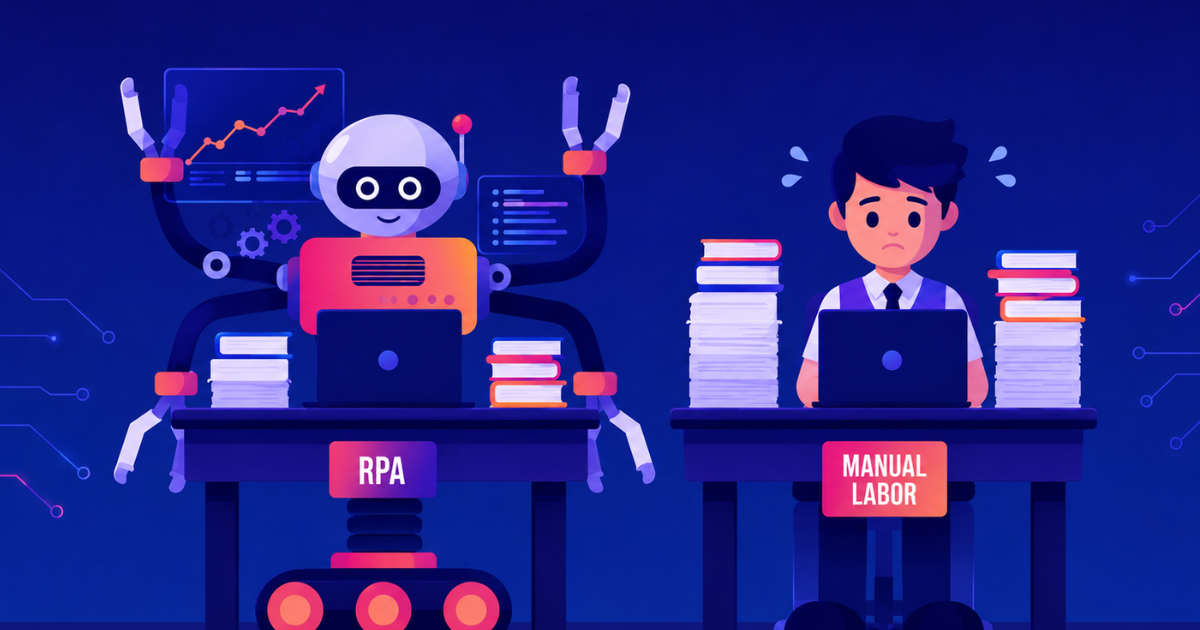
Indian classrooms are changing, but the teacher’s role isn’t disappearing. It’s evolving. Here’s how AI is quietly doing the heavy lifting so educators can focus on what only they can do: teach.
– Navneet Education Team
| 42%of teachers’ time spent on non-teaching tasks | 3 hrs+daily on grading & admin work on average | 1 in 3Indian teachers report signs of burnout |
Let’s be honest, teaching is one of the most demanding professions out there. Every morning, a teacher walks into a classroom, carrying lesson plans, attendance registers, pending test papers, parent queries, and that quiet worry about whether each student is actually keeping up. And they do this for 30, 40, sometimes even 50 students at a time.
So it’s not surprising that teacher burnout has become a real concern in India. A 2023 survey found that nearly one-third of school teachers across urban India felt overwhelmed by administrative tasks, tasks that had very little to do with actual teaching.
This is exactly where AI tools for teachers in India start stepping in. Not to replace the teacher, no, never that, but to take over the repetitive work, the time-consuming chores so educators can put more focus on what really needs a human: building relationships , nurturing curiosity, and steering young minds forward.
Here are 7 concrete ways AI is already doing this.
1. Automated grading for objective assessments
If you ask a teacher what they usually do with much of their evening, getting student papers graded will be almost one of their answers. Multiple choices, fill-in-the-blank questions, short answers, and even teachers who grade work that a well-constructed system can do in just seconds.
AI-assessment systems not only grade multiple choice questions automatically, but also identify the borderline answers for the teacher’s attention and even prepare student-wise performance reports. This can give teachers 2-3 hours weekly, at least, simply because of their released time.
| What teachers say“I used to spend my Sunday evenings correcting worksheets. Now the system does it, and I only step in for the written answers. It’s been a game changer.”, A Class 7 Maths teacher from Pune |
The teacher still reviews subjective work, still applies judgment and still decides what feedback really matters. The AI just takes care of the mechanical part, and does it without getting tired or anything like that, not even a little. Looking for a step-by-step introduction? Visit the NavneetAI Guide to learn how AI can support teaching without replacing educators.
2. Smart attendance tracking that doesn’t need a register
Taking attendance may sound like a simple task until you multiply it by 40 students, three times a day, and over 200 working days. Nowadays, automated attendance systems have become popular in India, Mainly in private schools and EdTech platforms. They can track attendance through different techniques like scanning QR codes, using RFID cards, recognizing faces, or checking in via an app without the need for manual marking.
Apart from time-saving, intelligent attendance systems can notify teachers about students’ absence patterns that are becoming alarming so that they can take action before it is too late.
| Real-world use-Various CBSE schools in Bangalore and Mumbai have implemented app-based attendance solutions that are directly linked to sending notifications to parents, so completely doing away with manual entry into the attendance book. |
The teacher still sees the shy student sitting in the corner. AI just ensures that the administrative work is already completed.
3. Personalised learning paths without extra prep work
One of the most challenging aspects of teaching a large class is that every student is different and learns at their own pace. In an ideal world, a teacher would offer each student a tailored learning experience. But, with 40 students and a set schedule, the teacher is only left with the impossible without help.
Platform-based AI learning analyses a student’s quiz results, time spent on topics, and error patterns to automatically suggest the right content at the right level. So, the student gets a personalised way; the teacher gets a dashboard showing who needs extra attention.
Teachers at navneetedu. AI actually sees the platform change the level of every learner. This means that the teacher no longer has to prepare three different ways for the same lesson. This is not a teacher’s differentiation vanishing. It is, in fact, a teacher’s differentiation empowering.
4. AI-generated lesson plans and content drafts
Lesson planning is a type of creative work, but most of it is actually routine. Preparing a list of objectives, designing worksheets, looking for suitable examples, and generating question banks all of these take quite a lot of time that teachers mostly do not have. Mostly, those who are handling multiple subjects or different grade levels.
based on a certain topic, grade level, and learning goal. The teacher can then modify, improve, and make it more personal. This change, from a blank page to a kind of guided refinement, can help a teacher save from 30 to 60 minutes per lesson.
| Important nuanceActivities and materials produced by AI are simply a launching pad and not a ready-to-use resource. The teacher’s knowledge of students, for example, who find it difficult to understand fractions, who require visual aids, and who best respond to storytelling, cannot be replaced. AI gives the structure; it is up to the teacher to complete the building. |
“AI doesn’t replace the teacher’s instinct. It replaces the paperwork that was getting in the way of it.”
— Education Technology researcher, IIT Bombay
5. Instant doubt resolution for students (outside class hours)
One of the most common sources of teacher overwhelm isn’t actually the classroom; it’s what happens after. Students’ messages on WhatsApp, parents’ calls with queries, and every single doubt that wasn’t fully answered in class become a kind of issue at home. Teachers end up feeling “on duty” way past school hours, sometimes even when they really should log off.
AI-powered doubt-solving bots like the ones you can find on navneetedu.ai allow students to type their questions and receive step-by-step explanations right away, whether it’s 4 PM or 11 PM. The system takes care of the routine, curriculum-aligned doubts, so the teacher does not get pulled into the same repetitive clarifications again and again. Instead, the teacher can stay ready for a deeper conversation
And honestly, this boundary really does matter for teacher wellbeing. A teacher who isn’t fielding ten doubt messages before dinner is usually a more rested, more present teacher the next morning, with less mental clutter, and more energy for the kids.
6. Progress reports and parent communication, automated
Creating personalised progress comments for 40 students at the end of term is definitely a task teachers might associate with a nightmare scenario, not because they don’t want to do it, but simply because it is very tiring. Besides report writing, there is also parent emailing, SMS updating, and fee reminder organising. AI software can draft student progress reports based on performance data, highlight those students who require more detailed reports, and even plan parent communication in advance.
Teachers spend some time checking and changing the comments to make them personal, though they are not creating 40 reports from scratch at midnight.
| What changesInstead of being a writer, the teacher becomes an editor. Their voice and decision still appear in the final report, but the preparation of the first draft no longer takes four hours. |
7. Early identification of struggling students
Teachers with years of experience sometimes talk about a visceral moment when they feel a child might not be keeping up. Such a hunch is still usually difficult to act upon in time in a large classroom.
Artificial intelligence systems that monitor test results, class participation, homework submission, and learning hours can identify students at risk as much as several weeks before a formal evaluation. This gives teachers a compelling reason to intervene early, instead of ending up identifying the gap only at the end of the term.
This scenario illustrates AI being used as a teacher’s assistant in education at the highest level. The decision is still with the teacher. The teacher is still the one who talks to the student. The teacher still reaches out to the parents. It was the AI that prevented the signal from being buried in the noise of a 40-student class.
So, will AI replace teachers?
No. And the argument isn’t even close.
Teaching isn’t a content delivery job. It’s a relationship profession. The way a teacher notices a student’s mood shift on a difficult day, the way they adjust an explanation when the class looks confused, the way they build trust with a child who has decided they’re “bad at maths”, none of that is automatable. It never will be.
What AI does is strip away the parts of the job that were never really “teaching” to begin with: the form-filling, the manual grading, the repetitive reminder messages, the report writing. It removes the friction so that the human parts, curiosity, empathy, adaptability, inspiration, get more space to breathe.
For Indian teachers in particular, where classrooms are large, resources are often stretched, and pressure from multiple directions is real, AI tools aren’t a luxury. They’re fast becoming a professional necessity, the same way a whiteboard and a textbook once were.
The question isn’t whether to adopt AI. It’s whether to let it work for you, or keep doing everything the hard way.
| Give your students the edge, and yourself some breathing room.Navneet Education’s AI-powered platform is built for Indian classrooms, designed with teachers, not just students, in mind.Explore navneetedu.ai → |
FAQs On AI Reduces Teacher Workload Without Replacing Teachers
1. How can AI reduce teacher workload in schools?
Through automating grading, attendance reporting, and lesson planning, AI can assist teachers in saving time and concentrating more on educating students.
2. Are AI tools replacing teachers in India?
AI does not replace teachers; it rather assists them by taking over monotonous tasks; however, educators However continue to really help in guiding, mentoring, and emotionally supporting students.
3. Which are the best AI tools for teachers in India?
The most significant AI tools assist in performing tasks like grading, personalising learning, checking attendance, clarifying doubts, and analysing classroom performance.
4. Can AI reduce marking workload for teachers?
Absolutely, AI grading multiple-choice assessments fast, reporting automatically, and flagging areas for improvement, which in total leads to a big reduction in teachers’ time spent on marking.
5. Why are Indian schools adopting AI tools in 2026?
In 2026, schools are starting to use AI to handle larger classrooms, and also to make learning outcomes better while reducing the teacher’s administrative workload. It’s not always perfect, but it does help in practice efficiently, like in those small day-to-day moments.